

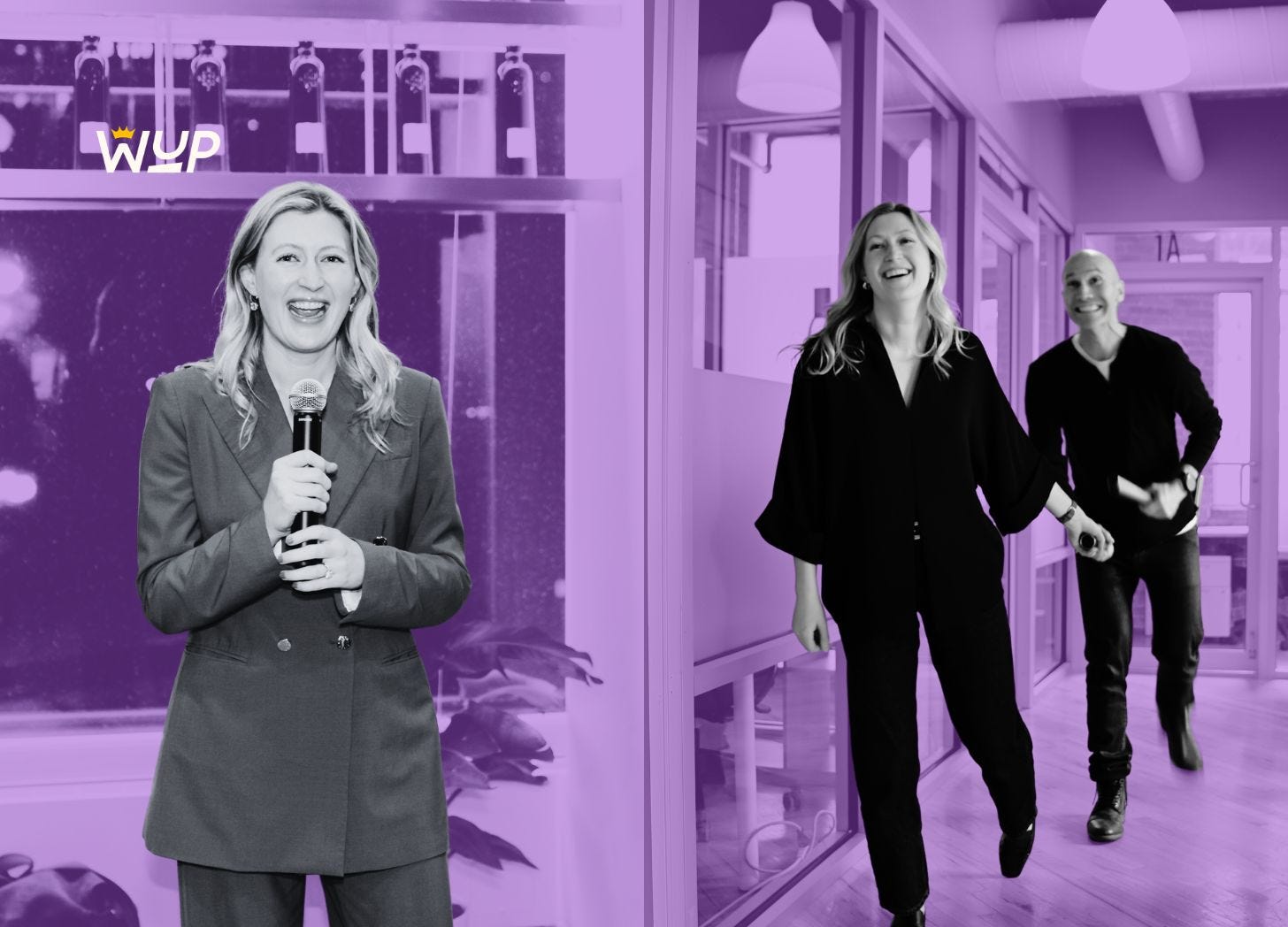

By the time she was roughly ten years into her career, Caroline Dell had accumulated between 3,000 and 4,000 LinkedIn connections. Some were former colleagues from management consulting firm Bain & Company and women’s reproductive health startup LOLA. Others were people she’d met briefly at events, conferences, or networking functions. “I realized I didn’t know who all those people were,” she says. “Some of them I had never met, some of them I had met and forgotten the context.”
It was 2019, and Caroline had recently joined Chief, the professional networking organization for executive women, as employee number five and head of growth. The opportunity itself had come through a woman named Cat Middleton, who had cold-emailed Caroline the year before simply because she’d heard good things about her through New York’s startup community. They grabbed coffee, stayed in touch, and within weeks Cat introduced Caroline to Chief’s cofounders.
Over the next five years, Caroline scaled Chief from 200 members to more than 20,000. To help herself remember who people were and how she knew them, she began sending new contacts LinkedIn messages that doubled as notes to her future self—where they’d met, what they’d discussed, and details she wanted to remember later. “It was a little bit of a hack,” she says.
At Chief, Caroline watched careers change through introductions, referrals, and private conversations. But as the network expanded, it became increasingly difficult to know who had the experience, expertise, or connections someone else might need. “There was the challenge, especially as the network got bigger and bigger, where we were like, ‘okay, someone here can help,’” she says. “It was always like, ‘who do I know who’s gone through this experience?’”
That’s when Caroline began to see the potential for her LinkedIn hack to become something bigger than a personal organizational system. Today, it’s Goodword, the AI-powered relationship management platform she founded in 2024. Described by her as a “relationship chief of staff,” the platform syncs with tools people already use—including LinkedIn, Gmail, calendars, contacts, and iMessage—to build a private map of a user’s professional network. Imagine you’re heading into a meeting with someone you met six months ago. Goodword can remind you where you met, what you discussed, who introduced you, and whether you ever followed up afterward. It can also suggest people in your network you may want to reconnect with, surface potential introductions, and help uncover opportunities hidden inside relationships you already have.
Rapid Fire Q&A
Concept year: Concept envisioned in 2023; Incorporated in 2024
# Months To Launch Inc.? We closed our $4M Seed financing just 1 year post-incorporation, and launched a commercial Beta 9 months later (October 2025).
$$ Personally Invested: 6 months with no salary
$$ From Friends & Family? ~$500K, including from both of Chief’s Co-Founders and scout funds Next Wave NYC and Andreessen Horowitz
$$ From Institutional Raising? ~$5M total
Year of first raise: 2024
# Months To Profitability? TBD
Importantly, Caroline says the company intentionally avoided building automated messaging tools or AI-generated outreach. "People were like, 'I don't want an AI robot messaging all my friends,'" she says of her early user interviews. "They kept saying, ‘I want to be a human. I just need help.’"
“The whole vision is, let’s take your people and your purpose and surface opportunities to you based off of those things,” she adds.
“The whole vision is, let’s take your people and your purpose and surface opportunities to you based off of those things.”
Caroline’s time at Chief shaped Goodword in more ways than one. Not only did Caroline’s experience there help spark the idea for the company, it was also where she first began to see herself as a founder.
On her one-year anniversary at Chief, the company’s CEO asked Caroline a question that would stay with her for years: would she rather become a COO or a CEO? “It was the first time someone sort of said, I see this potential in you to be a leader,” Caroline says. “Not only as an executive, but you actually have the option to be a founder CEO if you want to do that.”
Still, it took another four years before Caroline finally left Chief. By then, she was 32, newly married, and increasingly aware that if she wanted to build a company before having children, this was likely the window to do it. “There’s never a perfect time,” she says. “But for me this was the window where I felt like if I don’t do it now, I’m probably not going to do it for like 10 or 15 years.”
After leaving Chief in late 2023, Caroline spent three months interviewing roughly 100 founders, executives, investors, and operators about how they managed relationships. What she found was a strange patchwork of coping mechanisms: iPhone notes, Airtables, assistants manually tracking follow-ups, even walls covered in Post-it notes. “It was a universal pain point,” Caroline says. “People were basically saying, ‘I’ve just accepted the fact that networking sucks, but I really wish it didn’t.’”
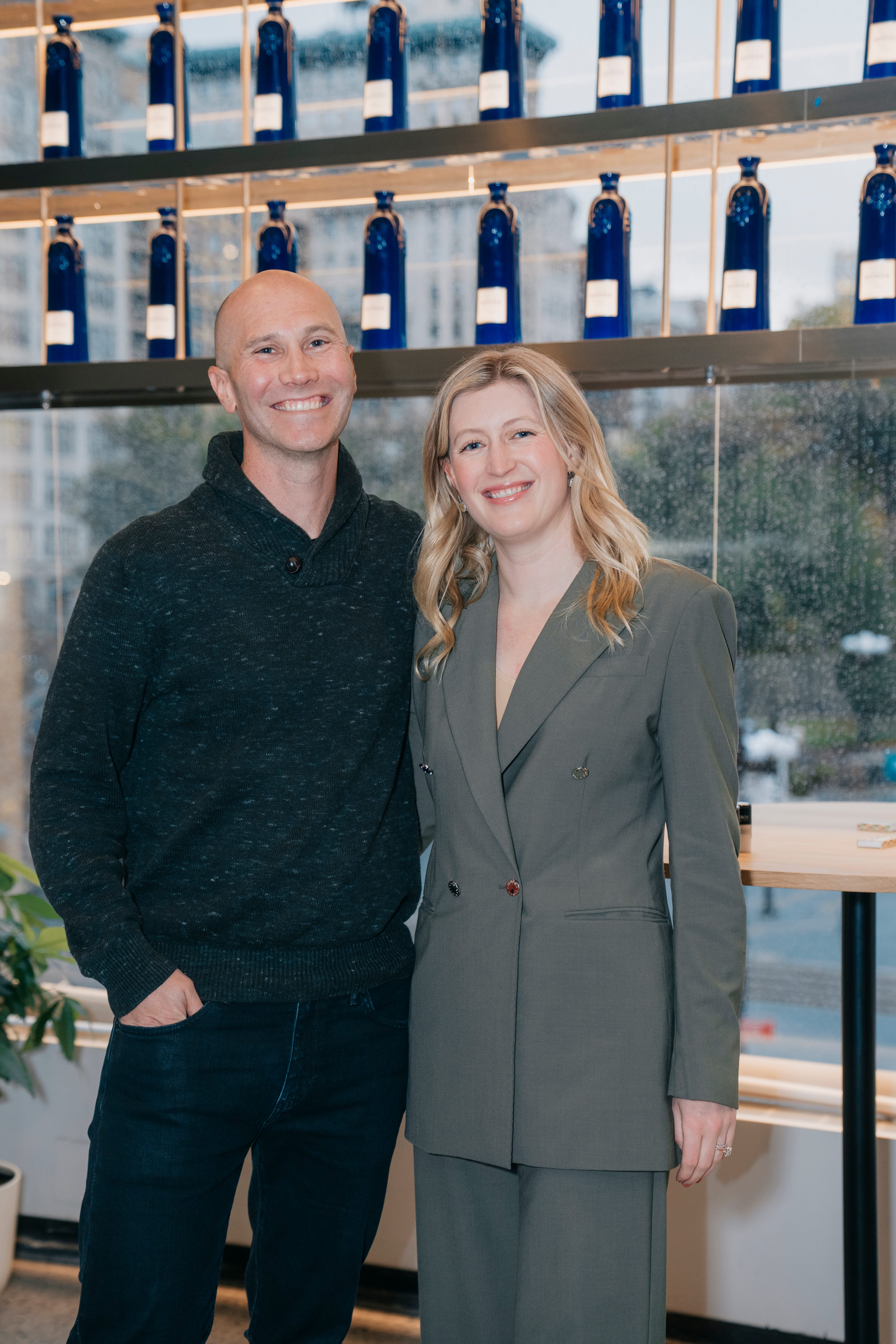
Caroline officially committed to building Goodword in January 2024. Her first priority? “I started cofounder dating,” she says, laughing, about her hunt for a co-founder. Investors were direct: building an AI company as a nontechnical solo founder would make fundraising significantly harder. Caroline began meeting candidates through startup accelerator Y Combinator’s cofounder matching platform. Then, that March, an old connection changed her trajectory once again. The same venture capitalist whose cold email had introduced her to Chief years earlier, Cat Middleton, reached back out and introduced her to the man who would become Goodword’s technical founder, Chris Fischer.
Rather than rush the partnership, Caroline and Fischer spent three months working together informally before officially committing. They rented desks at a WeWork, intentionally testing how they operated under pressure, and even hired a coach to evaluate how they handled communication, conflict, and decision-making. “You’re basically marrying someone for a decade,” Caroline says. “Don’t skip year zero.”
Within a few months, they had built an early prototype. One of their biggest mistakes, Caroline says now, was trying to build too much too quickly. “We tried to scope the whole solution,” she says. “In hindsight we probably should have just scoped one feature.”
Still, the prototype was strong enough to begin fundraising in fall 2024. Caroline first raised roughly $500,000 from friends, family, and angel investors, including checks from Chief’s cofounders. She also hadn’t paid herself a salary since leaving Chief. “That was my investment,” she says.
As 2024 came to a close, Goodword began raising a larger institutional seed round. The process was grueling: more than 100 investors, roughly 250 conversations, and months complicated by the presidential election and holiday slowdown. “There was definitely a moment where we thought ‘maybe we should just close a smaller round’,” Caroline says. “But the best advice I ever got was keep going.” Momentum finally shifted in January 2025, when Goodword went from roughly $2 million committed to more than $4 million committed within a month.
Around the middle of 2025, Goodword released an alpha version to roughly 200 friends and family members who tested the platform for free while Caroline and her team refined it. “That’s definitely something I would recommend,” Caroline says. “Ship when you are embarrassed. You’ve just got to get it out there, and the more feedback you can get, the faster you can build.”
Eight months later, the company launched a commercial beta and today, the platform is publicly available, with future updates focused on helping users better navigate and activate their real-world networks.
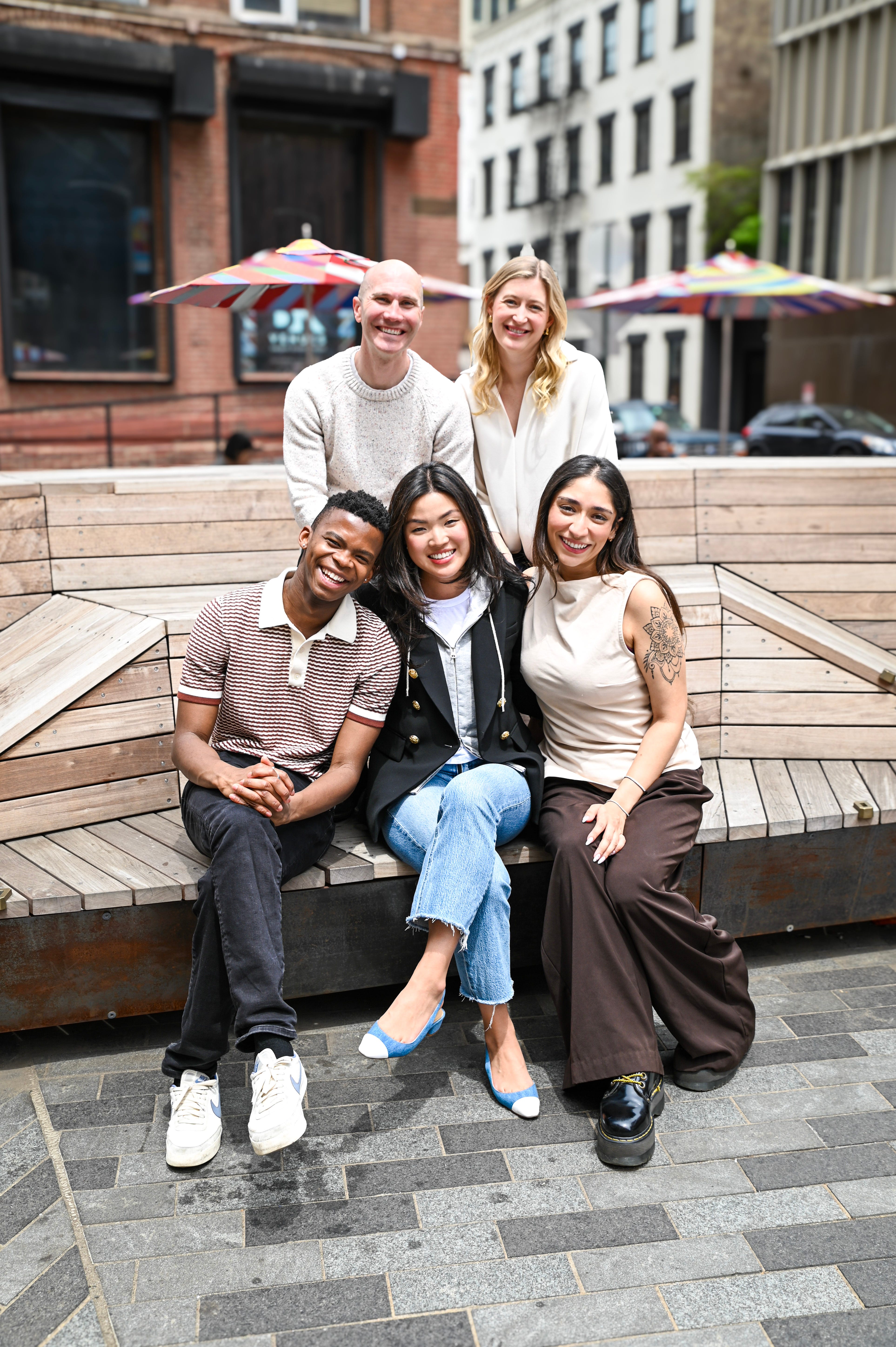
The work, however, has fundamentally changed Caroline’s personal life. “We’re constantly juggling, who’s walking the dog this morning?” Caroline says of life with her husband. “During the week I do not read my personal email inbox at all. I am absorbed in founder world. I can’t do any errands, I can’t do anything personal.”
But the long hours are worth it because ultimately, they’re in service of an idea she has seen play out repeatedly throughout her own life. “Every opportunity I ever had came from a connection,” she says. “At every company [I worked at], there was a person behind how I got the intro, the referral; there was someone who put in a good word for me.”
Now, she’s paying that forward.
This interviewee verified to Woman Up that their business has raised over $1M or generated over $1M in revenue.
Caroline’s Building Blocks
Find the connectors in your ecosystem, and cultivate your relationship. Every network has nodes—people who are genuinely plugged in, who pay attention, who make connections for the love of it. Invest in the connectors. Show up for them. And make sure that when someone calls them looking for a person like you, your name is on their list.
Your first believers are probably already in your corner. If you’re about to raise, look harder at your existing network before you look outward. Former managers, former colleagues, people who hired you, people you impressed in a previous chapter—these are the people who already have conviction in you as a person. That’s worth more than a cold email to someone who’s never seen you work and doesn’t know your name.
Pipeline cures all. Keep going. Fundraising is just a version of a sale—and like any sale, the answer to a slow process is a bigger pipeline. There are more VCs out there than you think, and your best intros to them are sitting in your network of fellow founders. They’ve been through it, they know who’s actually writing checks, and a warm intro from someone a fund respects is worth a hundred cold emails.

Bonus: The wUP List is live at womanupco.com!
Here are Caroline’s fave 3 brands to shop…
Glossier I admire this company as a NYC-based, female-led company that’s built an incredible brand.
Ghia I went to Brown with the founder.
Girl Math Capital I love their mission to get more women on cap tables, and they are also an angel investor in Goodword.


I completely understand this problem! In fact, I have said that someone needs to invent this exact thing!